Japan’s rich history is woven deeply into its stunning temples and peaceful shrines. While it isn’t a strictly religious country, these sacred spaces remain the spiritual heart of the nation, beautifully blending the traditions of Buddhism and Shintoism. You’ll find a quiet sanctuary at Buddhist temples [寺院 (jiin)], while Shinto shrines [神社 (jinja)] welcome you through the iconic embrace of a Torii [鳥居] gate. With thousands of these beautiful sites scattered across the country, each holding its own piece of history, deciding where to go can be overwhelming. Below are my absolute favorite picks to help you start your journey.
1] Senso-ji Temple in Tokyo
Senso-ji (which is also known as Asakusa Canon) is an ancient Buddhist temple in Asakusa, Tokyo. It is Tokyo’s oldest-established temple, and one of its most significant. It is dedicated to Kannon, the bodhisattva of compassion. Structures in the temple complex include the main hall, a five-story pagoda, and large gates. It is the most widely visited religious site in the world, with over 30 million visitors annually.

The temple premises are vast, with several smaller temples surrounding the main hall, a layout reminiscent of Indian temple complexes where smaller temples dedicated to other deities accompany the main temple. In front of the temple lies the famous Nakamise Shopping Street, which is also filled with numerous food stalls and souvenir shops.
2] Meiji Jingu Shrine in Tokyo
Tucked away in the bustling neighborhood of Shibuya, Meiji Shrine is a breathtaking Shinto sanctuary dedicated to the spirits of Emperor Meiji and Empress Shōken. While the emperor’s actual resting place is in Kyoto, this shrine serves as a vibrant spiritual monument. Taking the pathway to the main grounds feels like stepping into another world—you are instantly enveloped by a dense, tranquil forest that makes it hard to believe you’re still in the heart of Tokyo. You’ll be welcomed by several impressive Torii gates, including the awe-inspiring Otorii—one of the largest wooden gates of its kind in Japan. The main sanctuary itself, built in the gracefully sweeping nagare-zukuri architectural style, is a masterpiece of Japanese cypress and copper. Though the original structure was lost during World War II, it was lovingly rebuilt in 1958 through public donations, standing today as a serene testament to Japan’s enduring spirit.

Located to the south of the main shrine, the Inner Garden was a favorite spot of Emperor Meiji and Empress Shōken. It features beautiful walking paths, an iris garden that blooms in June, and
Kiyomasa’s Well, which is considered a “power spot” where people visit to receive positive energy. There is a small entrance fee to the Inner Garden.
3] Fushini Inari Taisha in Kyoto
Located at the base of Kyoto’s Mount Inari, Fushimi Inari-taisha is the spectacular head shrine dedicated to Inari, the Shinto god of rice and agriculture. Because Inari is also revered as the patron of business, thousands of merchants have shown their devotion by donating the shrine’s iconic vermilion Torii gates. In fact, there are roughly 10,000 gates across the grounds! The most famous section, the Senbon Torii, features about 800 gates tightly lined up to create a mesmerizing, seemingly endless tunnel. Beyond this vibrant entrance, a four-kilometer trail winds its way up the mountain, taking about two hours to explore as it passes numerous smaller shrines hidden within the woods. Its profound popularity has even inspired the creation of over 32,000 sub-shrines scattered all across Japan.

4] Kiymizu-dera in Kyoto
Translating beautifully to “Pure Water Temple,” Kiyomizu-dera is easily one of Kyoto’s most iconic Buddhist sanctuaries. Tucked into the eastern Higashiyama district, this UNESCO World Heritage site is an absolute must-see. Its history runs deep—founded in 778 AD, it actually predates Kyoto becoming Japan’s capital! Legend says a priest named Enchin Shonin was guided here by a vision of the sacred Otowa Waterfall, and the site was later expanded by the shogun Sakanoue Tamuramaro. While its roots are ancient, the spectacular buildings you see today were meticulously reconstructed in the 1630s under the orders of the Tokugawa Shogunate.

Perhaps the most famous feature of Kiyomizu-dera is its massive wooden stage that juts out dramatically from the main hall, 13 meters (43 feet) above the hillside. This impressive structure was built without using a single nail, relying solely on intricate wooden joints. The stage offers breathtaking panoramic views of Kyoto, especially stunning during cherry blossom season in spring and when the maple leaves turn fiery hues in autumn. In the Edo period, it was even a popular (though now forbidden) practice to jump off the stage, with the belief that surviving the fall would grant your wish. This gave rise to the Japanese expression “to jump off the stage at Kiyomizu,” which is similar to the English phrase “to take the plunge.”

The main hall houses the temple’s primary object of worship, a small statue of the eleven-faced, thousand-armed Kannon Bodhisattva(the Goddess of Mercy). While the original statue is only displayed to the public every 33 years, a replica is usually visible. The main hall is connected to the famous wooden stage.
5] Todai-ji temple in Nara
Located in the historic city of Nara, Tōdai-ji (or the “Eastern Great Temple”) is an absolute marvel of Buddhist architecture. Originally founded in 738 CE and deeply inspired by the grand temples of China’s Tang dynasty, this sprawling complex is an awe-inspiring UNESCO World Heritage site. Its undisputed centerpiece is the magnificent Great Buddha Hall (Daibutsuden). Rebuilt to its current glory in 1709, it houses the world’s largest bronze statue of the Buddha Vairocana, affectionately known as the Daibutsu. Serving as the headquarters for the Kegon school of Buddhism, Tōdai-ji isn’t just a window into Japan’s ancient past—it’s a vibrant, spiritual powerhouse that leaves every visitor speechless.

The temple premises are vast, with a typical Japanese temple layout. You pass through two large gates before reaching the outer wall and the main entrance to the complex. Upon entering, you’ll see a large bronze vessel, known as Kodogu in Japanese, used for burning incense. It is considered good luck to inhale the smoke from this vessel. As you continue, you’ll approach the main temple hall. Pictures simply don’t do the Great Buddha Hall justice—you have to stand in front of it to truly grasp its massive scale.

The main hall houses the renowned Great Buddha Statue, the world’s largest bronze Buddha statue, flanked by Kokuzo Bosatsu (the Buddha of wisdom) on one side and Nyorin Kannon (the wish-granting Buddha) on the other. Two Guardians are located in the back corners of the hall, with another pair at the main entrance.
6] Yasaka Shrine in Kyoto
The Yasaka Shrine, also known as Gion Shrine, is a vibrant and historically significant Shinto shrine located in the heart of Kyoto’s famous Gion district. Situated at the eastern end of Shijo-dori Street, it’s a central landmark and a popular destination for both locals and tourists. As twilight descends, the shrine awakens with an ethereal glow, a testament to the artful dance of light and shadow. Hundreds of lanterns, gifts from the community’s heart, ignite the dance stage, casting a warm, festive radiance that seems to weave magic into the very air.

The shrine is primarily dedicated to Susanoo-no-Mikoto, a prominent deity in Japanese mythology known as the god of the sea and storms. His consort, Kushinadahime-no-Mikoto, is enshrined to the east, and eight offspring deities (yahashira no mikogami) are enshrined to the west.
7] Kasuga Taisha in Nara
Just a stone’s throw from Tōdai-ji lies Kasuga Taisha, Nara’s most celebrated Shinto shrine and a designated UNESCO World Heritage site. Established in the 8th century to protect the capital, the shrine is famous for the thousands of stone and bronze lanterns donated by worshipers over the centuries. Because it’s nestled within the serene, sacred woods of the Kasugayama Primeval Forest, visiting this shrine offers more than just a quick stop—it provides a wonderfully atmospheric hike through nature, complete with wandering deer and moss-covered paths.


8] Sumiyoshi Taisha in Osaka
If you find yourself in Osaka, you cannot miss Sumiyoshi Taisha. As the grand head shrine to over 2,000 Sumiyoshi shrines across Japan, it is a magnificent testament to Shinto history. It is beautifully dedicated to the Sumiyoshi Sanjin—the three kami (gods) of the sea and sailing. While the absolute oldest shrine honoring these deities is actually located down in Hakata, Fukuoka, this Osaka flagship is an architectural marvel. Walking the sprawling, peaceful grounds—and crossing its iconic, sharply arched Sorihashi bridge—makes for a wonderful afternoon stroll.

9] Itsukushima Shrine in Hiroshima
Located on the sacred island of Miyajima in Hiroshima Prefecture, Itsukushima Shrine is easily one of Japan’s most breathtaking and iconic Shinto sanctuaries. Designated as a UNESCO World Heritage site, this deeply spiritual location is most famous for its magnificent “floating” Torii gate. Standing proudly in the waters of the Seto Inland Sea, the massive vermilion gate creates an unforgettable illusion of floating on the water’s surface during high tide, making it one of the most photographed landmarks in the entire country. If you time your visit for low tide, the sea actually recedes enough for you to walk right out onto the ocean floor and marvel at this colossal structure up close!

10] Nonomiya Shrine in Arashiyama
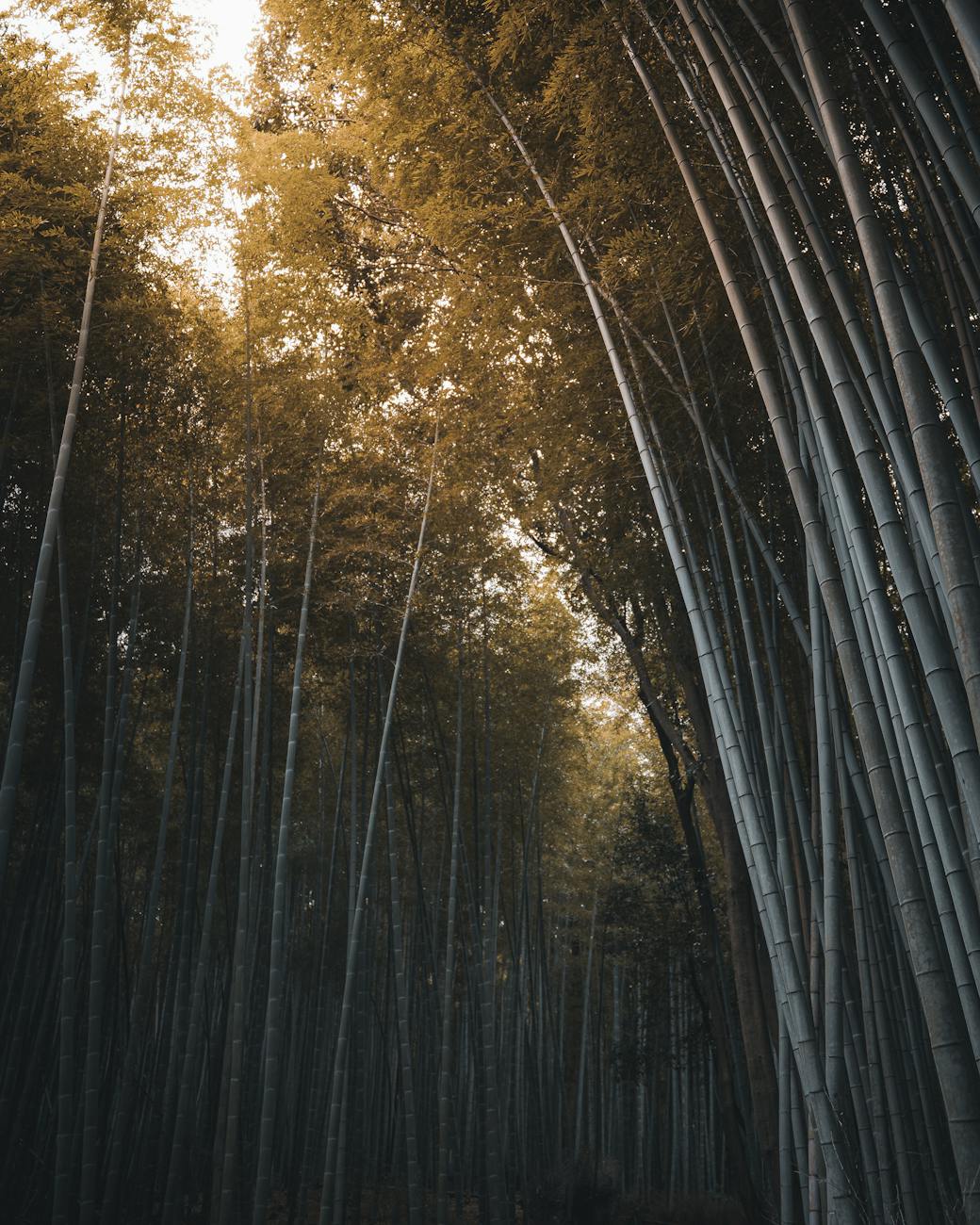
Deep within the world-famous Arashiyama Bamboo Grove, Nonomiya Shrine is a small but deeply significant Shinto sanctuary. It is famous for its unique kuroki-torii—a rare “black wood” gate made from unstripped oak logs, representing one of the oldest styles of Torii in Japan. Historically, this was a sacred site where imperial princesses would come to purify themselves before serving at the Grand Shrine of Ise. Today, the shrine remains a tranquil haven where visitors pause amidst the towering bamboo to pray for successful matches and happy families.

Japan’s temples and shrines are far more than just beautiful architecture; they are the living, breathing heart of the country’s cultural heritage. They offer peaceful havens for reflection and a tangible connection to deeply held ancient beliefs. Whether you’re standing beneath the striking silhouette of a Torii gate or taking in the quiet reverence of a wooden temple hall, these sacred spaces offer a profound glimpse into the true soul of Japan. They leave an unforgettable mark on anyone lucky enough to wander through them.
Leave a Reply